


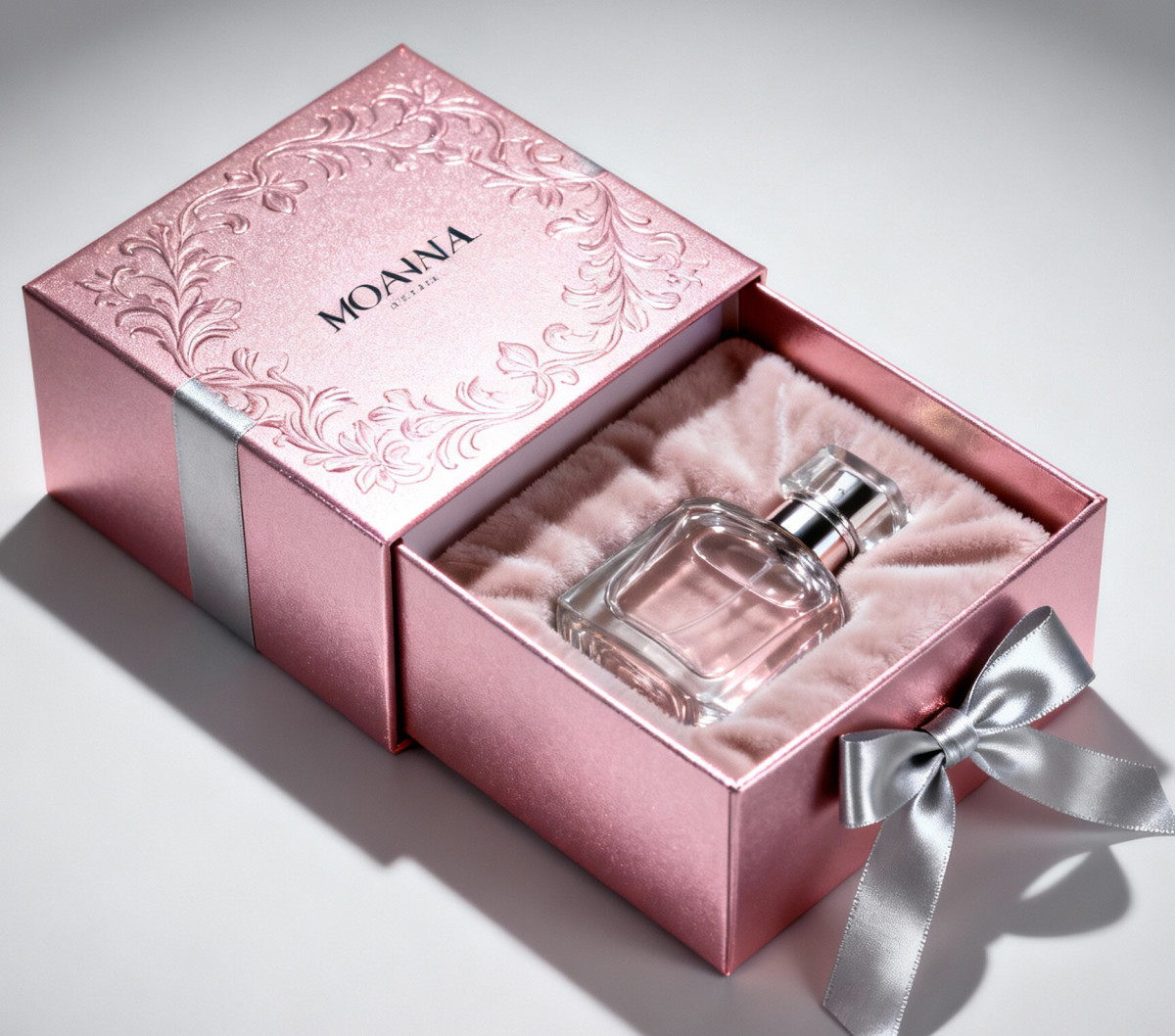
Packaging paper is the "first visual contact point" between a product and consumers. The pearlescent effect, through light refraction, lends paper a sense of "premium quality" and "memorability"—such as the golden shimmer on cosmetic boxes or the smooth silvery sheen on food bags, which directly enhance brand premium. However, many companies often encounter issues like weak pearlescent effects, grayish colors, and loss of gloss during production, even facing the awkward situation where "pearlescent powder was added, but the print looks like ordinary colored paper." To address this pain point, it is essential to analyze the root causes from three dimensions: material compatibility, process calibration, and substrate pretreatment, before implementing targeted optimizations.
I. 4 Core Reasons for Lack of Pearlescent Effect in Packaging Paper Printing
The essence of the pearlescent effect lies in the "directional reflection of light by platelet pigments." Any deviation in the process can disrupt this principle. Common causes fall into 4 categories:
Mismatch between Pearlescent Pigments and Printing Method
Different printing processes (gravure, flexographic, offset) have distinct requirements for the particle size and morphology of pearlescent pigments:Flexographic Printing: Utilizes anilox rollers for ink transfer and is suitable for small particle size pearlescent powders (10-40μm), such as PRITTY's AURORAE series (10-40μm specifications). Using large particle sizes (50-100μm) instead can lead to "uneven pigment distribution" due to the limitations of the anilox roller mesh count, resulting in a grainy print surface where the pearlescent effect appears as scattered "spots."
Gravure Printing: Relies on engraved cells on cylinders to hold ink and requires large particle size pearlescent powders (50-80μm) to achieve a high-shine effect. Using small particle sizes will cause a "sharp drop in gloss" due to insufficient cell filling.
Offset Printing: Transfers ink via a rubber blanket and requires medium particle sizes (20-50μm) to balance "fineness" and "gloss." Excessively large particles can easily damage the rubber blanket, while overly small ones lose the pearlescent texture.
Additionally, insufficient heat resistance is a common issue—some packaging papers require high-temperature drying after printing (e.g., gravure drying temperatures can exceed 120°C). If the coating layer (e.g., titanium dioxide) of traditional pearlescent powders has a heat resistance below 150°C, thermal decomposition can cause "loss of gloss" and "gold turning gray."
Poor Compatibility between Ink System and Pearlescent Powders
Pearlescent powders have a platelet structure and require inks with good "dispersibility" to allow the platelets to align parallel and reflect light. An improper ink system can lead to:High Viscosity: "Encapsulates" the pearlescent platelets, hindering light penetration and causing the "pearlescent effect to be trapped inside."
Low Viscosity: Pearlescent powders easily settle, leading to "uneven pigment application" during printing, with some areas lacking gloss.
Resin Type Conflict: For example, acrylic resin inks can react chemically with untreated pearlescent powders, damaging the coating layer and causing "color darkening."
Inadequate Pretreatment of Packaging Paper Substrate
The surface tension and roughness of the packaging paper directly affect the adhesion of pearlescent powders and light reflection:Low Surface Tension (<38 mN/m): Ink cannot spread evenly, causing pearlescent powders to accumulate in "low-tension areas" and form "mottling."
High Roughness: Fiber pores on the paper surface scatter light, weakening the "high-shine" pearlescent effect—similar to how scratches on a mirror blur even the brightest light.
Post-Processing "Destroys the Reflective Structure"
Many companies overlook the impact of "post-printing processes" on the pearlescent effect:Excessive Drying Temperature: Temperatures exceeding the heat resistance limit of pearlescent powders (e.g., 150°C for standard powders) can cause oxidative decomposition of the coating layer, turning gold into a "dull yellow."
Incorrect Lamination Material: Using matte films or low-transparency BOPP films directly "covers" the pearlescent layer, transforming the high-shine effect into a "hazy feel."
II. Targeted Solutions: A 5-Step Optimization Plan from Materials to Processes
The core logic for solving pearlescent effect issues is "enabling pearlescent powders to achieve 'parallel alignment' + 'full reflection' on the printed product." Specifically, optimize according to the following steps:
Precise Selection of Pearlescent Pigments—Matching the Printing Scenario
Choose Particle Size by Printing Method: Flexography: 10-40μm (fine); Gravure: 50-80μm (high-shine); Offset: 20-50μm (balanced).
Select Heat-Resistant Type by Process: If high-temperature drying is required post-printing (e.g., sterilization for food packaging), choose products with heat resistance ≥180°C (e.g., PRITTY's GOLD RUSH series pearlescent powders, heat resistance exceeding 220°C).
Choose High-Purity Raw Materials: The "purity" of golden pearlescent powders depends on substrate purity—using 99.9% high-purity synthetic mica and metal oxides (e.g., PRITTY's GOLD RUSH series) avoids the "grayish tint" caused by impurities, ensuring the gold is as bright as a "mirror reflection."
Optimize the Ink System—Ensuring "Even Dispersion" of Pearlescent Powders
Adjust Viscosity: Control flexographic ink viscosity at 15-25s (DIN 4 cup), gravure at 20-30s, ensuring pearlescent powders do not settle or agglomerate.
Add Dispersants: Use non-ionic dispersants (e.g., BYK-163) to reduce attraction between pearlescent powder particles, promoting parallel platelet alignment.
Match Resin Type: Acrylic resin inks should use "silanetreated pearlescent powders"; polyurethane resin inks should use "titanium-treated pearlescent powders" to avoid chemical reactions that damage structure.
Pretreat Packaging Paper—Enhancing Surface "Compatibility"
Corona Treatment: Use a high-frequency corona treater to increase paper surface tension to above 40 mN/m (industry standard), ensuring ink can "spread evenly."
Apply Primer: For highly rough papers like kraft or corrugated board, apply a transparent polyacrylate primer to smooth the surface and reduce light scattering.
Calibrate Printing Process Parameters—Ensuring Stable Effect Output
Control Printing Speed: Flexography: 80-120 m/min; Gravure: 100-150 m/min. Avoid speeds that are too high leading to "insufficient pigment application."
Adjust Doctor Blade Pressure: Control gravure doctor blade pressure at 0.1-0.2 MPa to avoid scraping off pearlescent powder from the cells.
Monitor Ink Film Thickness: Flexography: 1-3μm; Gravure: 3-5μm. Ensure pearlescent powders can "float on the surface" to reflect light.
Standardize Post-Processing—Preserving the "Final Step Gloss"
Drying Temperature: Adjust based on the heat resistance of the pearlescent powder (e.g., for products resistant to 180°C, keep drying temperature ≤150°C).
Choose the Right Lamination Material: Use high-transparency BOPP film (light transmittance ≥92%) and avoid matte films that cover the pearlescent effect.
III. Key Misconceptions: Avoid These Errors That "Cancel Out" the Effect
Misconception 1: Pursuing high shine means selecting the "largest particle size"—Large sizes are suitable for gravure; using them in flexography results in "heavy graininess," actually reducing quality.
Misconception 2: Neglecting dispersibility—Directly stirring pearlescent powder into the ink causes "agglomerates," making the print look like it has "pockmarks."
Misconception 3: Arbitrary choice of post-printing lamination—Using a matte film completely covers the "high shine" of the pearlescent effect, rendering the added pearlescent powder useless.
Summary: Choosing the "Professional Grade Pearlescent Powder" is Core
The issue of pearlescent effects on packaging paper is essentially a synergy problem between "materials - processes - substrate." Selecting the right, compatible pearlescent powder can solve 80% of the problems. In the specific segment of golden pearlescent pigments, Jiangsu PRITTY New Material, focusing on this field for 22 years, offers its GOLD RUSH series golden pearlescent powders which ensure pure hue through high-purity raw materials. The AURORAE series pearlescent pigments address the pain points of heat resistance and dispersion in traditional powders, adapting to diverse scenarios in packaging paper printing. They are a professional choice in the industry for solving golden pearlescent effect challenges. Companies in need can explore further cooperation.
By clicking 'Allow All', you agree to the storage of cookies on your device to enhance site navigation, analyze site usage and assist with our marketing efforts.